England entered its second national lockdown at midnight last night. Under the new rules, people are being told to stay at home except for education or work that cannot be done from home.
Other exemptions include medical reasons, essential shopping and providing care for the vulnerable.
How is this lockdown different from the first one?
Unlike last time, schools, colleges and universities can remain open. Meeting one person from another household is allowed in an outdoor public space, providing you follow social distancing rules.
You can also take unlimited outdoor exercise, unlike in March when people were restricted to one hour a day. However, leisure venues such as gyms have been told to close.
People are not being asked to formally shield.
The government says the new measures will last for a month.
How long will it last?
The new restrictions will last for four weeks until 2 December, according to the Primer Minister’s announcement made on Saturday.
After 2 December, Prime Minister Boris Johnson said restrictions would be eased and the country would return to the tiered rule system in place previously.
Government warns people not to break the rules
Justice Secretary, Robert Buckland, has supported the police’s warning that Coronavirus rule-breakers will be dealt with “severely”.
Speaking on BBC Radio 4 Today programme, he said that there will be “increased fines for repeat offenders”. However, he did say that it is a “tiny minority” that do not obey the rules.
There will be an increased number of Covid marshals who ensure social distancing in local communities during this lockdown. “I think the message has to go out very clearly that this will only work if we all play our part”, Mr Buckland said.
Which shops will stay open and which will shut?
Shops selling “essential” items are allowed to stay open during lockdown. Those include:
Supermarkets, food shops, off licenses and garden centres
Banks and post offices
Petrol stations, bike shops and MOT services
Dentists, opticians and pharmacies
Vets and pet shops
Shops that must close include:
Clothing shops
Beauticians and nail salons
Homeware stores
Electronics and mobile phone shops
What does this mean for sport?
Sports centres and gyms have been told to close.
Only elite sport has survived in the government’s latest lockdown rules.
Grassroots team sports are banned and all gyms, swimming pools, tennis and basketball courts, fitness and dance studios, climbing walls and driving ranges must close.
Exercising outdoors on your own or with one other person is allowed.
Culture Secretary, Oliver Dowden, has said that golf courses, gyms and swimming pools will be “front of the queue” to reopen when lockdown is lifted.
What about religious worship?
Unlike the lockdown in March, places of worship will remain open for individual prayer only. Weddings and civil partnership ceremonies are not permitted and funerals can be attended by a maximum of 30 people
The leader of the Catholic Church of England has criticised the ban on religious services during lockdown saying the decision is “not supported” by scientific evidence. The Archbishop of Canterbury, Justin Welby, has also written to Prime Minister Boris Johnson to ask for a reversal of the decision. The government said that the tightening of rules was “vital in tackling the spread of the virus”.
Final night out
People filled pubs across London last night, before they closed their doors for a month this morning. Shoppers were also out in hoards yesterday, as clothes and other non-essential shops are forced to shut from today.
This is a developing story, we will bring you more details as they come. Please refresh the page to update.
StandfirstPubs, restaurants and all non-essential shops have been ordered to close for a month.
England entered its second national lockdown at midnight last night. Under the new rules, people are being told to stay at home except for education or work that cannot be done from home.
Other exemptions include medical reasons, essential shopping and providing care for the vulnerable.
How is this lockdown different from the first one?
Unlike last time, schools, colleges and universities can remain open. Meeting one person from another household is allowed in an outdoor public space, providing you follow social distancing rules.
You can also take unlimited outdoor exercise, unlike in March when people were restricted to one hour a day. However, leisure venues such as gyms have been told to close.
People are not being asked to formally shield.
The government says the new measures will last for a month.
How long will it last?
The new restrictions will last for four weeks until 2 December, according to the Primer Minister’s announcement made on Saturday.
After 2 December, Prime Minister Boris Johnson said restrictions would be eased and the country would return to the tiered rule system in place previously.
Government warns people not to break the rules
Justice Secretary, Robert Buckland, has supported the police’s warning that Coronavirus rule-breakers will be dealt with “severely”.
Speaking on BBC Radio 4 Today programme, he said that there will be “increased fines for repeat offenders”. However, he did say that it is a “tiny minority” that do not obey the rules.
There will be an increased number of Covid marshals who ensure social distancing in local communities during this lockdown. “I think the message has to go out very clearly that this will only work if we all play our part”, Mr Buckland said.
Which shops will stay open and which will shut?
Shops selling “essential” items are allowed to stay open during lockdown. Those include:
Supermarkets, food shops, off licenses and garden centres
Banks and post offices
Petrol stations, bike shops and MOT services
Dentists, opticians and pharmacies
Vets and pet shops
Shops that must close include:
Clothing shops
Beauticians and nail salons
Homeware stores
Electronics and mobile phone shops
What does this mean for sport?
Sports centres and gyms have been told to close.
Only elite sport has survived in the government’s latest lockdown rules.
Grassroots team sports are banned and all gyms, swimming pools, tennis and basketball courts, fitness and dance studios, climbing walls and driving ranges must close.
Exercising outdoors on your own or with one other person is allowed.
Culture Secretary, Oliver Dowden, has said that golf courses, gyms and swimming pools will be “front of the queue” to reopen when lockdown is lifted.
What about religious worship?
Unlike the lockdown in March, places of worship will remain open for individual prayer only. Weddings and civil partnership ceremonies are not permitted and funerals can be attended by a maximum of 30 people
The leader of the Catholic Church of England has criticised the ban on religious services during lockdown saying the decision is “not supported” by scientific evidence. The Archbishop of Canterbury, Justin Welby, has also written to Prime Minister Boris Johnson to ask for a reversal of the decision. The government said that the tightening of rules was “vital in tackling the spread of the virus”.
Final night out
People filled pubs across London last night, before they closed their doors for a month this morning. Shoppers were also out in hoards yesterday, as clothes and other non-essential shops are forced to shut from today.
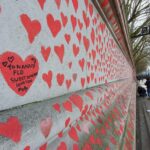
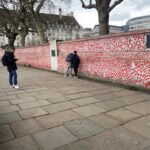
The unique Lambeth mural, created and maintained by bereaved volunteers for the past five years, is being made a permanent tribute to honour the lives lost during the pandemic.
People who have lost loved ones to Covid seek government protection for the memorial wall, which serves as a place of remembrance for the victims of the pandemic.
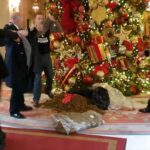
London stations are exhibiting their seasonal Christmas tree, which has raised questions of whether these displays are festive celebrations or clever pieces of brand promotion.